Peptides
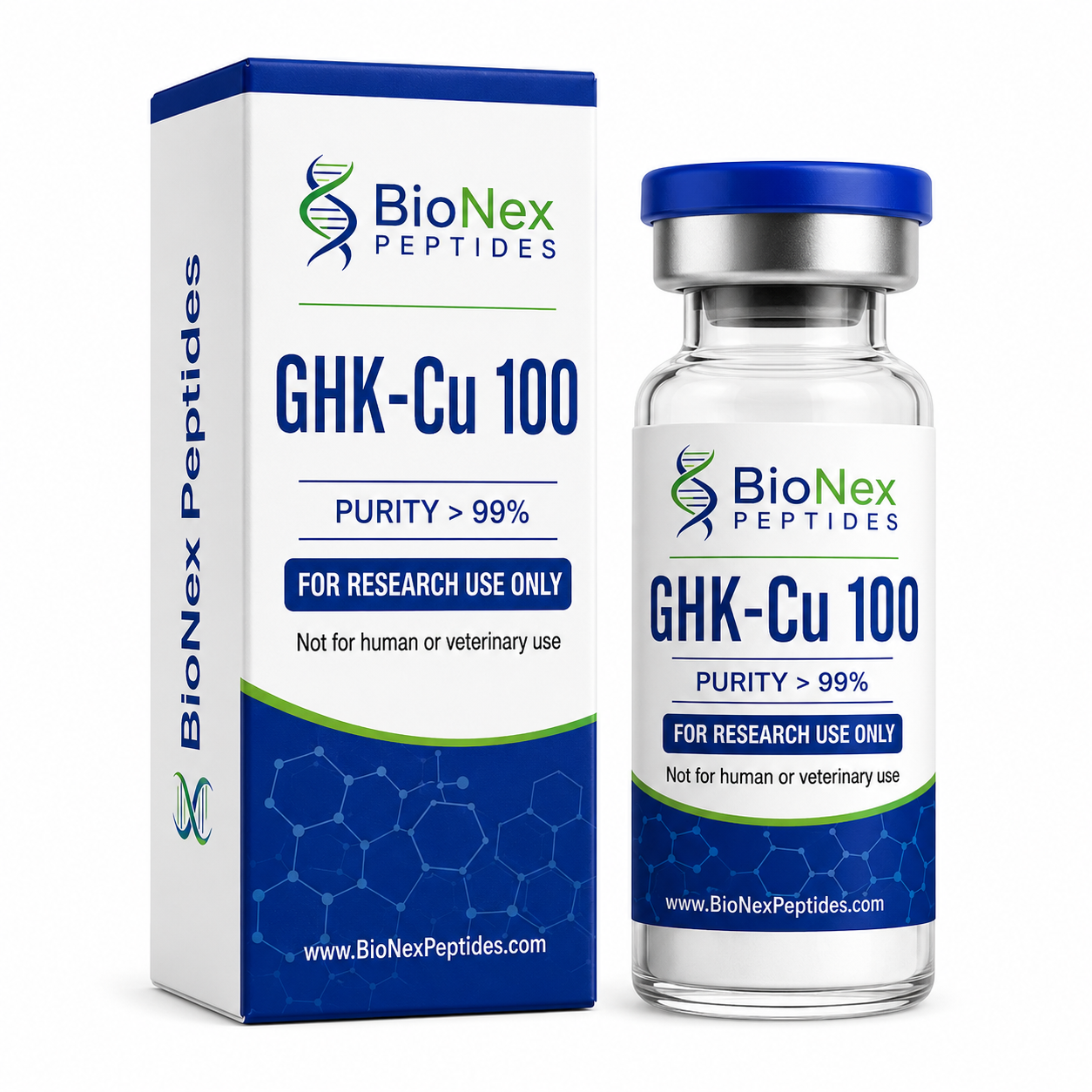
GHK-Cu
- Research classification
- Peptides
For laboratory research use only. Not for human or veterinary use.
Lot & quality
Lot-specific analytical documentation
No verified lot documentation is published for this compound yet. Results, laboratories and purity values are never shown without a source record for the exact lot.
View available lot-specific analytical documentationEnter lot number
Verification connects to the BioNex lot and COA records in a later phase — no results are returned yet
- 01
Lot Number
- 02
COA
- 03
HPLC
- 04
Mass Spectrometry
- 05
Purity
- 06
Laboratory
- 07
Testing Date
- 08
QR Verification
Research snapshot
Verified research records currently indexed by BioNex
- Publication records
- 41
- Registered clinical trials
- 3
- Human observational
- 2
- Preclinical
- 3
- Reviews
- 6
- Related evidence
- 5
- International records
- 1
- Years indexed
- 1997–2026
Categories are listed separately and must not be added together: publication records and registered trial records are different record types, and a single study may appear in more than one category.
Compound profile
Research overview
Curated research content has not yet been imported for this compound. No generated summary is shown in its place.
Classification
Research areas
- Extracellular Matrix Research
- Senescence & Longevity Research
Targets
Mechanisms under investigation
Copper(II) binding and associated gene-expression effects (proposed)
Investigated/proposed mechanism
GHK is described as a copper(II)-binding tripeptide; review literature reports associated changes in gene expression in cell and tissue models. Clinical significance is not established.
Source
Evidence
Evidence breakdown
Direct compound evidence
33
Publication records indexed as describing this compound directly.
Related evidence
5
Parent-molecule or fragment literature. Counted separately and never added to direct evidence.
Human research
- Human observational2
Records describing research in human participants.
Preclinical research
- Animal3
Animal and laboratory records. Not human evidence.
Review literature
- Reviews6
Reviews summarise other work rather than reporting new results.
Related evidence
- Parent molecule / fragment / mechanistic context5
Parent molecule, fragment and mechanistic context records. These are NOT direct evidence for this compound.
Registered clinical trials
- Registered trial records3
Registration records a study, not a result. Trials are counted separately from publications.
Scientific identity
Compound identity
- Canonical scientific name
- GHK-Cu (glycyl-L-histidyl-L-lysine copper(II) complex)
- Molecular formula
- C28H46CuN12O8
- Molecular weight
- 742.3 g/mol
- CAS number
- 130120-56-8
- Sequence
- GHK
- Sequence length
- 3 residues
- PubChem CID
- 9831891
- UNII
- DL1TR6W6VM
- Research classification
- Peptides
Indexed literature describes: Identity data describe a copper(II) bis-complex representation of glycyl-L-histidyl-L-lysine (PubChem CID 9831891).
These records describe the scientific entity reported in the literature. Lot-specific analytical documentation is available through BioNex Quality Verification when provided for the applicable lot.
Scientific data
- Compound
- GHK-Cu
- Molecular formula
- C28H46CuN12O8
- Molecular weight
- 742.3 g/mol
- CAS number
- 130120-56-8
- Peptide sequence
- GHK
- Research classification
- Peptides
Global research
Research records by jurisdiction
Jurisdictions appear only where an indexed record establishes them. Research recorded in one country never implies authorisation in another.
Loading United States records
Published research
Representative recent records
Verified records currently indexed by BioNex
Loading records
Scientific identity records describe the entity reported in the literature. Lot-specific analytical documentation is available through BioNex Quality Verification when provided for the applicable lot.
BioNex Research Intelligence summarizes and organizes scientific literature for research and educational purposes. Inclusion of a publication, clinical trial, or regulatory record does not constitute endorsement, clinical guidance, or evidence of safety or efficacy for human use.
Related